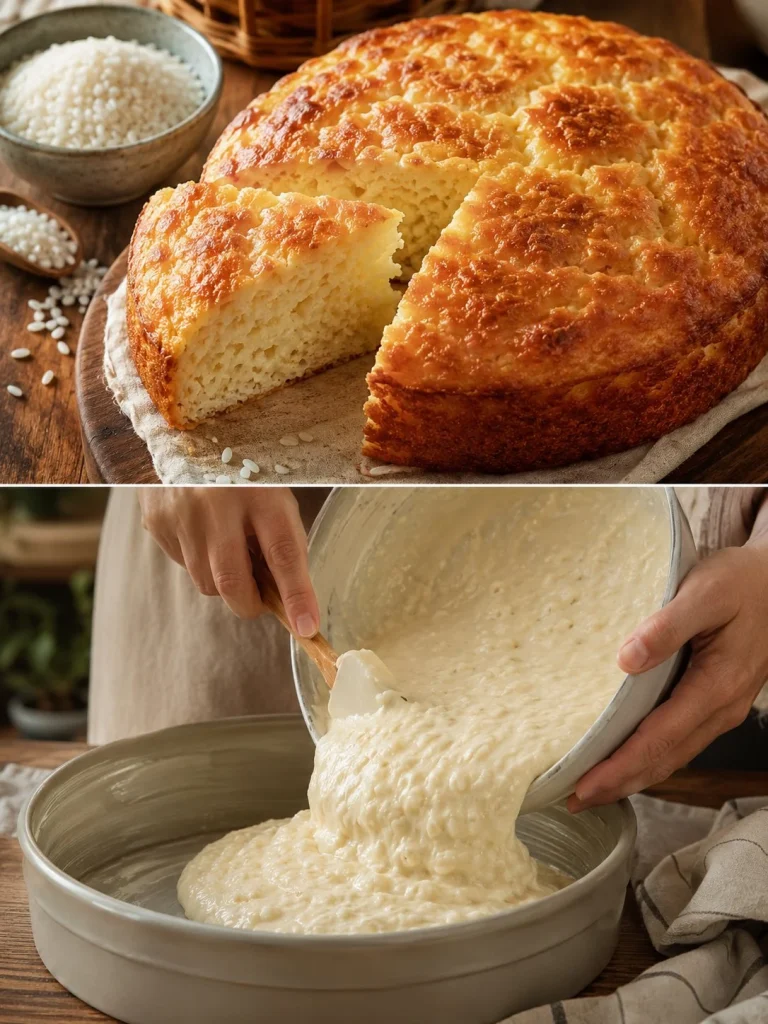
This Yeast Rice Cake recipe offers a delicious and comforting way to use simple pantry staples like rice, flour, and yeast to create a soft, tender cake with a subtle tang from natural fermentation. It’s a unique option for home cooks who want to try a different kind of baked good that feels both hearty and fresh. While it isn’t a light, low-calorie treat due to its flour and sugar content, it can be a satisfying family snack or breakfast addition with a rustic texture and mild sweetness. Just be aware that its yeast fermentation might not suit everyone sensitive to yeast products.
The recipe is ideal for cooks looking for a budget-friendly way to stretch ingredients into a filling dish, especially families or beginners who appreciate hands-off resting and baking times. The rice adds moisture and a soft crumb, while the resting period lets the yeast develop flavor without overwhelming sourness. One handy tip is to allow the batter to cool slightly before mixing in the yeast and flour, which helps the yeast activate properly without being damaged by heat.
Why This Recipe Is Helpful
- Uses common pantry staples, making it easy and affordable to prepare.
- The rice-based batter creates a moist and tender texture different from regular yeast breads.
- It’s a straightforward method with simple resting and baking steps suitable for beginner bakers.
- Provides a comforting, mild-flavored cake that can be enjoyed plain or with spreads.
- The mix of yeast and rice fermentation adds a gentle complexity without requiring sourdough starters.
- Can be adapted with different liquids or add-ins for slight flavor changes.
Who This Recipe Is Best For
This cake is perfect for families wanting a filling snack or breakfast option that offers something beyond usual bread or cake recipes. It suits cooks looking for a soft, yeast-risen dish that doesn’t use eggs or butter and offers a good balance of carbs and moisture. People who enjoy experimenting with yeast baking but want a forgiving, low-maintenance recipe may also find this appealing. The rice base keeps it approachable and slightly lighter in texture compared to dense bread.
Who Should Be Careful
While this dish is not heavily sweet, it does contain 1 tablespoon (12.5 g) of sugar which helps activate the yeast. Those managing blood sugar closely should enjoy this cake in moderation. Also, people sensitive to yeast or who experience bloating from fermented products may want to proceed with caution or avoid it altogether. Although it’s baked and not fried, the cake contains refined flour, so it’s best as an occasional treat rather than a daily staple for those seeking whole grain or low-glycemic foods.
Ingredients
- 1 cup (190 g) rice, washed
- 3 cups (720 ml) water, divided
- 100 ml (about 1/2 cup) milk or water
- 1 tablespoon (12.5 g) sugar
- 1 teaspoon (3 g) active dry yeast
- 1/2 teaspoon (3 g) salt
- 3 cups (375 g) all-purpose flour
- 2 tablespoons (30 ml) vegetable oil
Ingredient Notes
Using rice cooked into a soft base adds hydration and a subtle grain flavor that keeps the cake moist longer. White rice is traditional here, but short- or medium-grain varieties work best for sticking to the right texture. The sugar is essential for yeast activation and a slight sweetness; it can be reduced slightly but don’t remove it entirely. Milk adds richness but can be swapped for water if dairy-free. Vegetable oil keeps the batter tender and prevents drying out.
For a bit more nutrition, some home cooks might substitute part of the white flour with whole wheat or spelt, but remember this will change the texture and may require slight extra hydration. Opting for active dry yeast, properly proofed, ensures good rise and flavor.
Kitchen Tools Needed
- Medium-sized pot
- Mixing bowl
- Wooden spoon or whisk
- Greased baking dish (8×8 inch or similar)
- Oven
Step-by-Step Instructions
- Rinse 1 cup (190 g) of rice well under cold water to remove excess starch. Combine the rice with 3 cups (720 ml) of water in a medium pot. Bring to a boil, then reduce heat and simmer until the rice is fully cooked and soft, about 15-20 minutes.
- Remove the pot from heat and let the rice sit uncovered for 15 minutes to cool slightly. This prevents heat from killing the yeast added later.
- In a large mixing bowl, transfer the cooled rice along with any remaining cooking liquid. Add 100 ml (about 1/2 cup) of warm milk or water (about 104°F/40°C), 1 tablespoon (12.5 g) sugar, 1 teaspoon (3 g) active dry yeast, 1/2 teaspoon (3 g) salt, and 3 cups (375 g) of all-purpose flour.
- Mix everything thoroughly until a smooth batter forms. It should be thick but still somewhat pourable. Cover the bowl loosely with a clean cloth or plastic wrap and let it rest in a warm spot for 1 hour. The batter will rise and become bubbly, indicating yeast activation.
- After resting, gently fold in 2 tablespoons (30 ml) of vegetable oil to keep the batter moist and tender without deflating the bubbles completely.
- Grease your baking dish well with oil or nonstick spray. Pour the batter into the dish, smoothing the surface gently.
- Bake the cake in a preheated oven at 180°C (350°F) for 50-60 minutes, or until the top is golden and a toothpick inserted near the center comes out clean.
- Allow the cake to cool completely before slicing. This helps it finish setting and makes cutting neater.
- Serve plain, with butter, jam, or alongside savory spreads. Enjoy your soft, yeast-infused rice cake with friends and family.
Pro Tips
- Make sure the milk or water added to activate yeast is warm but not hot (100-110°F / 37-43°C). Too hot kills the yeast.
- Rest the batter in a draft-free, warm area to encourage better rise and flavor development.
- Don’t overmix after adding oil post-proof; fold gently to preserve air bubbles for a lighter crumb.
- Use a clear baking dish if possible so you can monitor browning and doneness.
- Letting the cake cool fully helps avoid gummy or sticky texture when sliced.
- For a slightly sweeter cake, add a teaspoon of vanilla extract or a tablespoon of honey in step 3.
Healthier or Lighter Swaps
- Swap half or all of the all-purpose flour for whole wheat flour for more fiber but expect a denser texture.
- Reduce sugar to 2 teaspoons if you want less sweetness; yeast can still activate but slower.
- Use plant-based milk instead of dairy to suit vegan diets.
- Experiment with adding grated vegetables like carrot or zucchini to boost nutrients without overpowering flavor.
- Serve with fresh fruit or natural yogurt to balance the richness.
Common Mistakes
- Using water that’s too hot for the yeast can prevent the batter from rising.
- Skipping the cooling step of cooked rice may kill yeast or lead to a heavy batter.
- Overmixing post-proof can deflate the batter and produce a dense cake.
- Baking at too high a temperature might brown the crust quickly but leave the center undercooked.
- Cutting the cake while warm often results in a mushy texture and crumbly slices.
Variations
- Add 1/2 cup of raisins, chopped nuts, or dried cranberries for texture and flavor contrast.
- Swirl in cinnamon or nutmeg for warm spice notes.
- Replace sugar with maple syrup or agave, adjusting liquids slightly.
- Mix in 1 cup of cooked mashed sweet potato or pumpkin for seasonal variation and moisture.
Serving Suggestions
This yeast rice cake is excellent as a breakfast item served warm with butter and honey or as a snack with tea or coffee. Pair it with a side of fresh fruit or a light yogurt dip for a balanced experience. For a savory twist, try spreading ricotta and herbs or soft cheese and smoked salmon.
Storage Instructions
Store leftover cake tightly wrapped in plastic wrap or in an airtight container at room temperature for up to 2 days. For longer storage, freeze slices wrapped individually and thaw gently when ready to enjoy.
Reheating Tips
Reheat slices in a toaster oven or conventional oven at 325°F (160°C) for 5-7 minutes to regain softness and warmth without drying out. Microwaving is possible but may yield a slightly rubbery texture.
Nutrition Estimate (per serving, assuming 8 servings)
- Calories: ~210
- Protein: 5 g
- Carbohydrates: 40 g
- Fat: 4.5 g
Values are approximate and depend on exact brands and portion size.
Recipe Summary
Prep Time: 25 minutes (plus 1 hour resting)
Cook Time: 50-60 minutes
Total Time: About 2 hours
Servings: 8
Cuisine: Comfort / Home-baked
Course: Snack / Breakfast
Calories: ~210 per serving
Frequently Asked Questions
Is this recipe good for digestion?
The yeast fermentation adds some flavor complexity but this cake isn’t specifically designed for digestive health. People sensitive to yeast may want to avoid it.
Is this recipe suitable for people managing blood sugar?
It contains sugar and refined flour, so it’s best enjoyed in moderation by those watching blood sugar levels.
Can I make this recipe lighter?
Reducing sugar slightly or swapping part of the flour for whole grains can make it a bit healthier, though the original recipe balances flavor and texture well.
Is this recipe good for kids?
Yes, kids often enjoy the soft texture and mild sweetness, making it a great homemade snack or breakfast option.
Can I make this without dairy?
Absolutely, replacing the milk with water or plant-based milk works fine without changing the outcome significantly.
This simple yet satisfying yeast rice cake recipe is a lovely way to bring something a little different to your baking routine. Its use of rice adds moisture and softness that stand out against typical bread textures. Remember to rest the batter properly and bake fully to enjoy a tender cake with an inviting golden crust. If you’re curious about enhancing homemade recipes with thoughtful preparation, you might also appreciate this natural homemade avocado seed shampoo for soft, shiny hair—a small reminder that little steps outside the kitchen can feel just as rewarding.