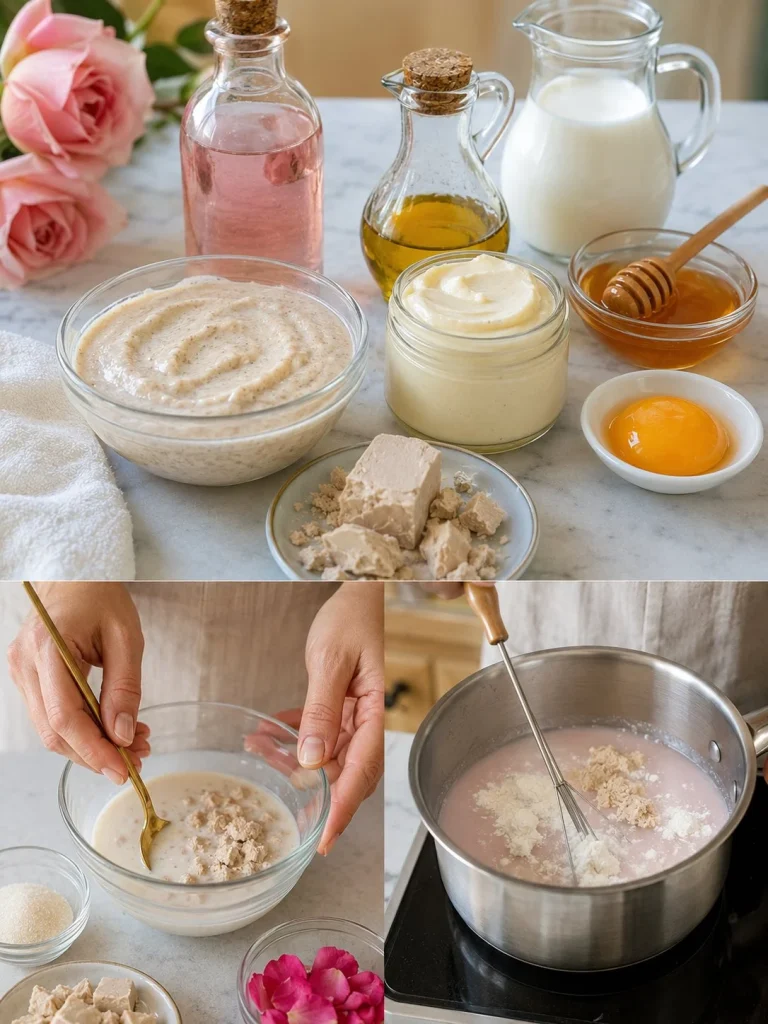
This yeast-based face and hand mask combined with a soothing rose water cream is a unique and effective blend designed to nourish and refresh the skin naturally. Using simple kitchen ingredients like fresh and instant yeast, olive oil, honey, and rose water, it offers a gentle way to support skin texture and hydration. The natural components bring mild exfoliation and moisture, which may appeal to those seeking a non-chemical, budget-friendly alternative to cosmetic products. While it’s a nourishing option, people with sensitive or allergy-prone skin should patch test first to avoid any irritation from yeast or honey.
This recipe is best suited for anyone interested in natural skincare routines who enjoy DIY beauty treatments made with pantry staples. The mask develops layers that dry into a firm film, so expect a tightening sensation without discomfort. Using rose water in the cream enriches the routine with a calming floral aroma and mild astringent properties, making it ideal for a soothing nighttime ritual.
Why This Recipe Is Helpful
- Uses accessible and affordable ingredients you likely have at home
- Combines natural yeast fermentation benefits with moisturizing honey and olive oil
- The layering technique provides gentle exfoliation and a firming effect
- Rose water cream adds soothing hydration and a pleasant fragrance
- Suitable for face, hands, and décolleté for multi-area care
- Can be integrated into regular self-care without expensive cosmetics
Who This Recipe Is Best For
This mask and cream duo is perfect for individuals who prefer natural skincare methods using whole ingredients rather than synthetic formulations. It works well for those who appreciate gentle exfoliating treatments and want to boost skin softness and radiance without harsh chemicals. People managing dry or dull skin and those keen on a simple, nurturing routine will find this especially helpful. The creamy texture of the mask layers and the lightly thickened rose water cream create a pleasant tactile experience.
Who Should Be Careful
Because it contains yeast and honey, those with allergies to these substances or very sensitive skin should do a patch test before applying widely. Also, if you have skin conditions that react badly to layered masks or occlusive applications, it may not suit your routine. As the mask includes multiple layers drying on skin, people prone to dryness should follow with a good moisturizer afterward. Finally, avoid use near the eyes and lips to prevent irritation.
Ingredients
- 1/2 cube fresh yeast (about 15 g / 0.5 oz)
- 4 tablespoons (60 ml) warm milk (about 100°F / 38°C)
- 1/2 teaspoon (2 g) sugar
- 1 tablespoon (15 ml) olive oil
- 1 teaspoon (7 g) natural honey
- 1 egg yolk (from a large egg)
- 100 ml (about 3.4 fl oz) rose water
- 1 teaspoon (3 g) cornstarch
- 1 tablespoon (10 g) instant yeast
Ingredient Notes
Fresh yeast acts as a natural exfoliant and helps stimulate skin renewal, while instant yeast gently supports fermentation in the cream. Olive oil and honey moisturize and soothe, providing antioxidants and softness. Egg yolk adds nourishing fats and proteins that are good for skin barrier support. Rose water naturally tones and refreshes, and cornstarch slightly thickens the cream for smooth application. These natural ingredients together offer balanced skin-nurturing properties without synthetic additives.
Kitchen Tools Needed
- Small mixing bowls
- Whisk or fork
- Measuring spoons and cups
- Clean container for mixing
- Heat-safe saucepan
- Clean jar with lid for storing cream
- Soft brush or clean fingers for applying mask
Step-by-Step Instructions
- In a small bowl, dissolve the fresh yeast in warm milk. Add sugar and stir until fully dissolved. Let this mixture rest for 5 to 6 minutes until slightly frothy—this indicates the yeast is active.
- In another clean bowl, whisk together olive oil, honey, and egg yolk until well combined.
- Slowly add the yeast-milk mixture into the olive oil and honey mixture, stirring gently to blend.
- Using a brush or clean fingers, apply a thin layer of this mask mixture carefully over your face, hands, and décolleté, avoiding the eyes and mouth. Let it dry completely before applying the next layer.
- Repeat the layering process until you have applied five layers total. Let the final layer sit on your skin for about 20 minutes for full effect.
- After the mask dries, rinse off thoroughly with lukewarm water, gently pat skin dry.
- For best results, repeat this mask every other day for two weeks.
For the Rose Water Cream:
- In a small saucepan, combine rose water, cornstarch, and instant yeast. Heat gently over low flame, stirring consistently for 3 to 4 minutes until the mixture thickens to a creamy consistency (similar to light pudding).
- Remove from heat and let cool slightly, then transfer to a clean jar. Store refrigerated for up to 5 days.
- At night, apply a thin layer of this cream to face, neck, and hands. Massage gently and leave on for 20 minutes before rinsing off with lukewarm water.
Pro Tips
- Warm the milk to just under body temperature for optimal yeast activation—too hot can kill it.
- Dry each mask layer fully to build a firm but comfortable film; rushing this step can cause peeling.
- Use a soft brush for even layers and less mess.
- The rose water cream thickens more as it cools; if too thick, stir in a small amount of rose water before applying.
- Store leftover cream in an airtight container to maintain freshness and avoid contamination.
- Be consistent with the two-week routine for the best skin texture results.
Healthier or Lighter Swaps
This recipe is already quite natural and light; however, you could skip the egg yolk to reduce richness if you prefer a lighter mask. For an extra hydration boost, replace olive oil with light almond or jojoba oil. If you have difficulty sourcing fresh yeast, a fully instant yeast version can work, but fresh yeast gives a gentler fermentation effect.
Common Mistakes
- Applying thick layers too quickly without drying causes uneven texture and longer drying times.
- Using milk that’s too hot kills yeast and prevents frothing.
- Skipping the sugar reduces yeast activation and the mask’s efficacy.
- Forgetting to avoid eyes and lips leads to irritation.
- Not rinsing with lukewarm water can leave residues that clog pores or dry skin.
Variations
- Add a few drops of essential oils such as lavender or frankincense to the cream for extra fragrance and subtle calming effects.
- Substitute honey with maple syrup for a different but still natural sweetener if allergic to bee products.
- Use goat or coconut milk instead of cow’s milk for a dairy alternative, adjusting texture as needed.
- For more exfoliation, lightly mix in fine oatmeal before applying the mask layers.
Serving Suggestions
Use the mask and cream as part of a weekly self-care routine. After rinsing the mask, follow up with your favorite light moisturizer to lock hydration. If you enjoy spa-like pampering, pair the mask day with a gentle cleanse and maybe a warm herbal tea for relaxation. The rose water cream works well just before bedtime, prepared to soothe skin without heaviness.
Storage Instructions
Keep the rose water cream refrigerated in a tightly sealed jar and use within 5 days. The yeast mask is best made fresh each time and not stored, as fermentation and texture change quickly.
Reheating Tips
The cream should be used cold or at room temperature; reheating is not advised. The mask mixture must be prepared fresh before each application for yeast activity and effective layering.
Nutrition Estimate (per serving – topical use only)
- Calories: Negligible for skincare application
- Protein: Minimal from egg yolk
- Carbohydrates: Minimal from sugar and honey
- Fat: Low from olive oil and egg yolk
These values are mainly relevant if accidentally ingested in small amounts. This recipe is intended for external use only.
Recipe Summary
Prep Time: 10 minutes
Cook Time: 5 minutes for cream
Total Time: 15 minutes
Servings: Enough for multiple face and hand applications
Cuisine: Natural skincare
Course: Beauty regimen
Frequently Asked Questions
Is this recipe good for digestion?
No, this is a topical skincare mask, not edible for digestion purposes.
Is this recipe suitable for people managing blood sugar?
Since it’s for external use, sugar content is minimal and not a concern for blood sugar control.
Can I make this recipe lighter?
Yes, skip the egg yolk or use lighter oils for a less rich mask.
Is this recipe good for kids?
Caution is advised; children’s skin is sensitive, and patch testing is recommended before use.
Can I make this without sugar or honey?
Sugar helps activate yeast, and honey moisturizes; skipping both may reduce effectiveness and moisture benefits.
Conclusion
This natural yeast face and hand mask paired with a rose water cream presents a wonderful opportunity to nourish your skin affordably at home. It balances mild exfoliation with moisturizing ingredients, creating a warm, gentle beauty ritual. Keep in mind the importance of layering carefully and doing a patch test if your skin is sensitive. With consistent use, this recipe helps bring a fresh, softened look without relying on costly cosmetic products.
For those curious about additional natural care routines and how simple ingredients can make a difference, don’t miss exploring the helpful tips on permanently getting rid of facial, body, and pubic hair for a fuller natural self-care approach.