Cilantro is one of those herbs that adds bright, fresh flavor to so many dishes, but it’s notoriously tricky to keep fresh for more than a few days. The problem? It wilts and turns yellow quickly if not stored right. This guide shares practical, tested ways to keep cilantro fresh and flavorful for weeks or even months, which can really cut down on waste and save you money. Since cilantro is almost all leaf and water, how you store it affects the texture and taste dramatically. If you love cooking with fresh herbs but struggle with them going bad too fast, this approach is for you — just keep in mind that dehydrated or frozen cilantro works great in cooked dishes, but won’t replace the bright crunch of fresh leaves in salads or garnishes.
This method is best suited for home cooks who rely on fresh herbs regularly and want easy, no-fuss ways to maintain supply. You’ll find options here whether you prefer to refrigerate, freeze, or dry cilantro, so you can pick what suits your cooking style and freezer space. Also, pay attention to drying and freezing tips to avoid bitterness or mushy textures. The kitchen trick that makes a big difference is thoroughly drying cilantro after washing to avoid sogginess, which is where many people get it wrong and end up throwing herbs away.
Why This Recipe Is Helpful
- Offers several methods to keep cilantro fresh for different fridge or freezer timeframes
- Prevents waste by extending herb life from days to weeks or months
- Easy to do with common household items like paper towels, plastic wrap, ice cube trays, and jars
- Helps maintain flavor and texture, with freezer and dried options that suit cooked recipes well
- Saves money by reducing the need to buy cilantro repeatedly
- Practical for meal preppers, home cooks who love fresh herbs, or anyone wanting to avoid constant shopping trips
Who This Recipe Is Best For
This approach fits cooks who use cilantro regularly—whether in salsa, salads, soups, or garnishes—and want the freshest taste on hand without daily trips to the store. It’s ideal for people with some fridge/freezer space who want flexible options depending on how fast they use herbs. Also, it suits cooks who occasionally like to preserve cilantro for long-term use in cooked dishes via freezing or drying, where fresh texture isn’t essential.
Who Should Be Careful
While these storage methods are non-invasive and simple, keep in mind that dried or frozen cilantro won’t substitute perfectly for fresh whenever a crisp texture or bright fresh taste is critical (like fresh herb salads, finishing touches, or bouquets garni). If you or your family are picky about the herb’s texture, stick to refrigeration methods and use freezing/drying mainly for cooking. Anyone with strong sensitivities to cilantro’s flavor might find freezing or drying changes the taste slightly.
Ingredients
- 1 bunch fresh cilantro
- Clean water (for washing)
- Paper towels
- Plastic wrap
- Food storage container (airtight)
- Ice cube trays
- Glass jar with lid (for dried cilantro)
- Zip top freezer bag
Ingredient Notes
- Fresh cilantro bunch: Look for vibrant green leaves, avoid bunches with brown or yellow stems or leaves as these spoil faster.
- Paper towels: These are used for drying and wrapping to control moisture—key to success here.
- Plastic wrap: Wrapping tightly reduces exposure to air and slows wilting.
- Ice cube trays and freezer bags: Convenient for portioned freezing and cooking use, especially in soups, stews, or sauces.
- Glass jar: Perfect for storing dried cilantro to keep it crisp and away from moisture.
Kitchen Tools Needed
- Sink or large bowl (for washing cilantro)
- Paper towels or clean kitchen towels
- Food storage container with lid
- Plastic wrap
- Ice cube trays
- Freezer-safe zip top bags
- Oven or air fryer (optional, for dehydrating)
- Glass jar with lid
Step-by-Step Instructions
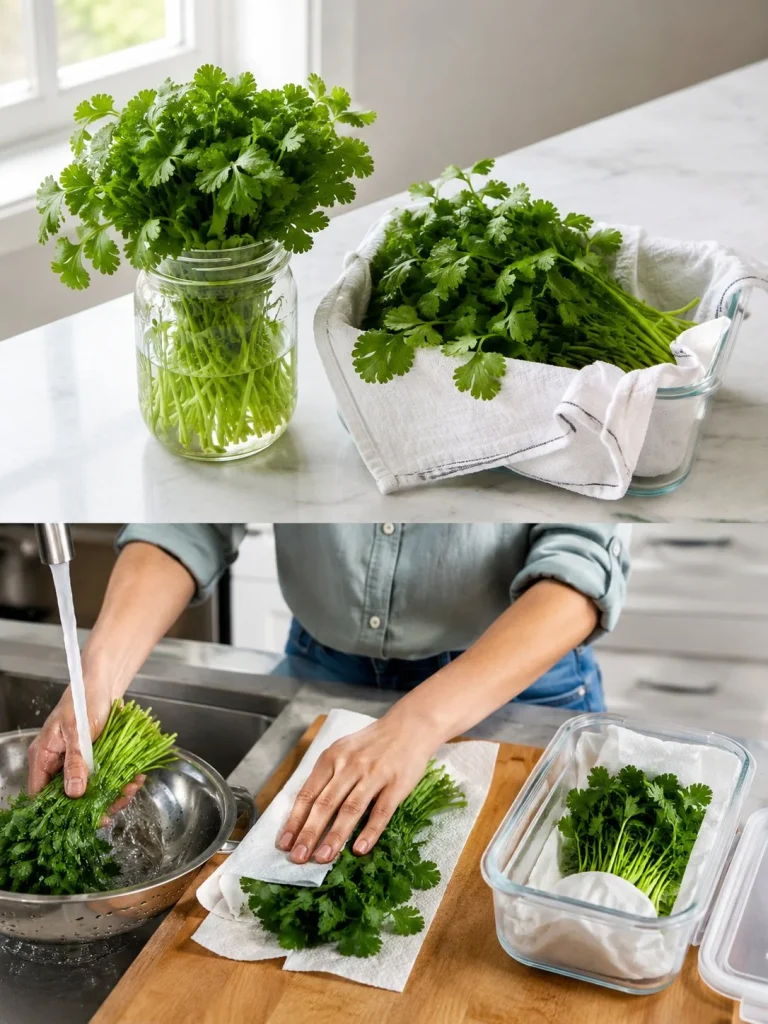
- Inspect and clean: Start by separating the cilantro bunch and picking out any yellow, wilted, or spoiled sprigs. Discard those to avoid spoilage spreading.
- Wash gently: Soak the cilantro briefly in clean, cold water to remove dirt and grit. Avoid rough handling to prevent bruising leaves.
- Dry thoroughly: Lay the cilantro on paper towels and pat dry carefully, or spin in a salad spinner if you prefer. Getting the leaves as dry as possible is key to preventing early rot.
- Choose your preferred storage method:
- Method 1: Damp Towel Refrigerator Storage
- Slightly dampen a paper towel (not soaking wet).
- Wrap small bunches (3–4 stems) of cilantro in the damp towel.
- Place wrapped bundles inside a food storage container with a lid and refrigerate.
- This keeps cilantro fresh and crisp for about 1–2 weeks.
- Method 2: Plastic Wrap Whole Bunch
- Wrap the entire cilantro bunch tightly with plastic wrap, ensuring no air pockets.
- Place in the refrigerator crisper drawer.
- This can keep it fresh up to 2 months, but check periodically for any spoilage.
- Method 3: Freezing Chopped Cilantro in Container
- Chop dry cilantro leaves finely.
- Fill an airtight container with the chopped cilantro and freeze.
- Use these frozen herbs directly in cooked dishes without thawing.
- Method 4: Freezing Cilantro Ice Cubes
- Chop cilantro finely and place into ice cube trays (fill about 2 tablespoons / 30 ml per compartment).
- Fill each compartment with clean water and freeze.
- Transfer frozen cubes to a zip top bag for storage.
- Use one cube per serving in soups, stews, or sauces.
- Method 5: Dehydrating Cilantro
- Dry cilantro thoroughly by placing it on a baking sheet in an oven at 170°F (77°C) or air fryer at low temp until crisp (2–3 hours).
- Once crisp, crumble into a powder form and store in a glass jar with a tight lid.
- Use as a seasoning where fresh texture isn’t needed.
Pro Tips
- When wrapping in paper towels, a slightly damp towel is better than a wet one to prevent sogginess. Too much moisture speeds spoilage.
- For freezing, fully dry leaves before chopping; excess moisture causes freezer burn and mushiness.
- Use freezer cubes as convenient single portions—you won’t need to thaw a whole bag or container.
- Check cilantro stored wrapped in plastic weekly and remove any yellow leaves to prolong freshness.
- Dehydrated cilantro works great in spice blends but avoid using it where fresh texture or bright flavor is key.
- Don’t overcrowd your storage container; air circulation inside the fridge helps keep herbs fresh.
Healthier or Lighter Swaps
Since this process involves only fresh herbs and storage methods, there’s no risk of extra calories or fat. If you want a fresher, lighter option, always prefer the refrigeration methods over freezing or drying because taste and texture are closer to fresh. Avoid heavy sprays or dressings on cilantro for storage, which add unnecessary ingredients and damage leaf integrity.
Common Mistakes
- Storing wet cilantro without drying—this leads to soggy leaves and faster decay.
- Wrapping the bunch loosely or with air pockets—excess air causes wilting and yellowing.
- Freezing cilantro without chopping or drying first—results in clumps and mushy texture.
- Using frozen or dehydrated cilantro raw as a garnish—they lose that fresh pop of flavor and texture.
- Forgetting to check stored cilantro regularly—small yellow spots should be removed to prevent spread.
Variations
- Use this method with other delicate herbs like parsley or basil, adjusting dehydration times accordingly.
- Combine chopped frozen cilantro with garlic or lime juice cubes for quick seasoning bases.
- Add a paper towel layer between cilantro bunches in storage container to keep excess moisture away.
- Try freezing cilantro in olive oil instead of water for a richer flavor boost in cooking—great for sautés and sauces.
Serving Suggestions
Fresh cilantro is fantastic for brightening salsas, garnishing tacos, mixing into salads, or topping fresh bowls like rice or buddha bowls. Frozen cubes work wonderfully in soups, curries, or blended sauces where cooking mellows the herb. Dehydrated cilantro is best sprinkled into dry rubs or soups but should be used sparingly in place of fresh to avoid flavor loss.
Storage Instructions
Refrigerated cilantro (wrapped or in damp towel) should be used within 1–2 weeks for optimal freshness. Frozen chopped cilantro and ice cubes maintain quality up to 6 months when stored airtight. Dried cilantro lasts several months if stored in an airtight jar in a cool, dry place away from sunlight.
Reheating Tips
Since this is a fresh herb preservation guide rather than a cooked dish, reheating isn’t necessary. When using frozen cilantro cubes, simply toss them into hot pots or pans—they’ll thaw quickly and infuse flavor during cooking.
Nutrition Estimate (per 1/4 cup fresh cilantro, ~16 g)
- Calories: 4
- Protein: 0.3 g
- Carbohydrates: 0.7 g
- Fat: 0.1 g
Cilantro is very low in calories and fat, adding freshness and antioxidants to meals without extra energy intake. The fiber is minimal but still contributes a slight boost to digestion. Using fresh herbs can add flavor without salt or fat, making them a smart seasoning choice.
Recipe Summary
Prep Time: 10 minutes
Storage Time: 1 week to 2 months (depending on method)
Yield: 1 bunch cilantro preserved
Cuisine: Universal
Course: Herb prep
Calories: 4 (per ¼ cup fresh)
Frequently Asked Questions
Is this recipe good for digestion?
While cilantro adds some fiber and freshness to meals, its primary purpose here is flavor preservation rather than digestive benefits. It can support digestion by encouraging fresh herbs instead of salt or heavy seasoning but shouldn’t be relied on solely for digestive effects.
Is this recipe suitable for people managing blood sugar?
Yes, cilantro itself has negligible carbs and no sugar, so maintaining fresh herbs is a good option for flavorful but low-carb cooking. Just watch how you use it in the dish.
Can I make this recipe lighter?
The methods are naturally light since they involve only fresh herbs and simple storage. Choosing refrigeration methods keeps the most delicate texture and bright flavor.
Is this recipe good for kids?
Absolutely, kids who enjoy fresh herbs will benefit from fresher cilantro. Frozen cubes may be less appealing raw but work well in cooked meals they already like.
Can I meal prep with this method?
Yes, freezing chopped cilantro in containers or ice cubes is a great meal prep trick, so you always have flavor on hand without spoilage worries.
Conclusion
Keeping cilantro fresh can feel like a constant battle, but with these simple storage methods, you can enjoy bright, flavorful herbs for weeks or even months. Whether you prefer the crispness of refrigerated wrapped bunches or the convenience of frozen cubes for cooking, these tricks reduce waste and make cooking with fresh cilantro easier and more enjoyable. Remember, the key is drying well to avoid sogginess and choosing the right storage for how you plan to use your cilantro most. This practical approach means less stress and more delicious meals with vibrant herbs every day.