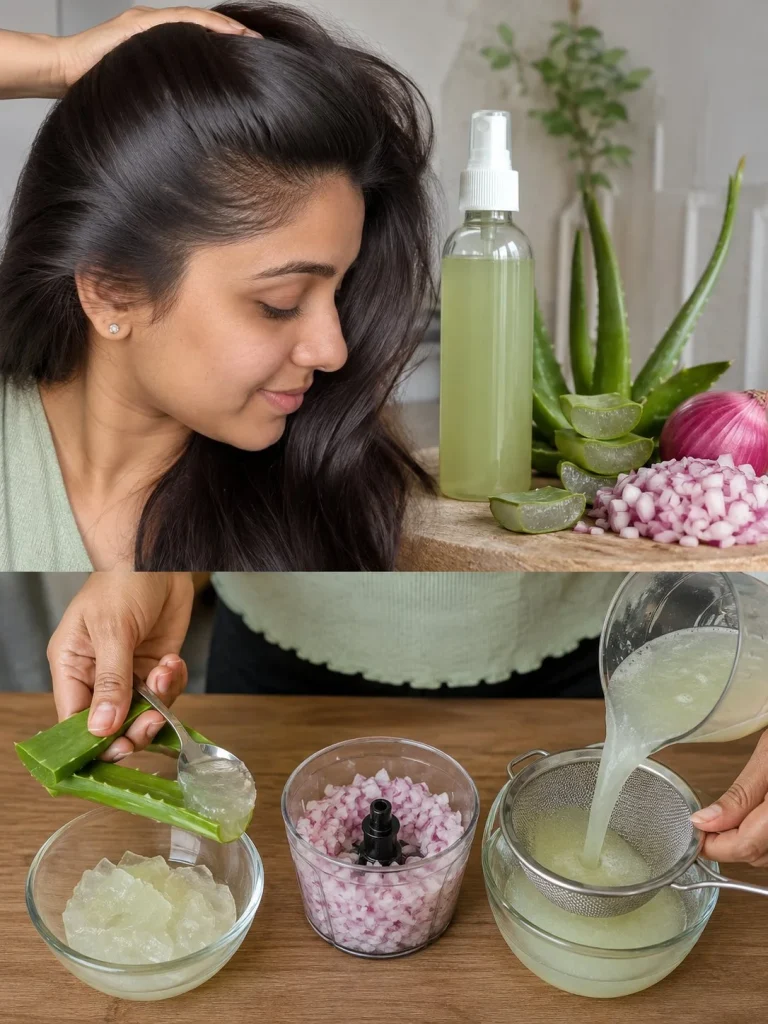
This simple, homemade hair tonic combines aloe vera, onion, and a nourishing oil like coconut or olive oil to create a natural scalp treatment that can support healthier hair care routines. The recipe extracts fresh juice from aloe vera and onion—both known for their moisturizing and soothing properties—then blends it with oil to help nourish your scalp and hair strands. While this isn’t a miracle cure, regular use might improve scalp condition and add shine, making it appealing for those who prefer natural, DIY hair care without synthetic additives. People with sensitive scalps should patch test first, as onions can sometimes cause irritation or a strong smell.
This recipe is especially suited for home cooks who want an easy-to-make, natural hair care blend with minimal ingredients. The fresh aloe gel provides a smooth texture, and blending it with onion juice extracts as much nutrient-rich liquid as possible, which pairs well with the oil to create a sprayable mixture. It’s best used consistently and with care as the smell of onion can linger, but rinsing after treatment helps. Storing leftovers in the fridge helps maintain freshness, with a simple application process that fits well into a weekly self-care routine.
Why This Recipe Is Helpful
- Uses fresh, whole ingredients with minimal processing for a natural hair tonic
- Simple preparation requiring just basic kitchen tools and common ingredients
- The aloe vera gel soothes dryness while onion juice may help improve scalp circulation
- Adding coconut or olive oil helps moisturize and lightly condition hair strands
- Spray application is easy to use on roots and ends, fitting smoothly into a routine
- Budget-friendly and free from synthetic chemicals or preservatives
Who This Recipe Is Best For
This recipe is great for home cooks interested in natural, DIY hair care, especially those with dry or irritated scalps seeking gentle moisture. It suits people who appreciate simple kitchen-based beauty treatments using fresh, natural ingredients. Also, anyone who prefers oil-based treatments rather than store-bought products with harsh chemicals might find this tonic appealing. It may be helpful during seasons when hair tends to feel dry or dull.
Who Should Be Careful
Onion juice can be irritating or cause allergic reactions for some, especially those with sensitive skin or scalp conditions. The strong onion smell may be off-putting or linger even after shampooing, so if you’re sensitive to odors, testing a small patch is wise. People with open wounds or scalp sores should avoid use until healed to prevent irritation. If using coconut oil, consider your hair type as it can sometimes feel heavy on fine hair.
Ingredients
- 3 medium-sized aloe vera leaves
- 1 medium-sized onion (about 150 g / 5 oz)
- 2 tablespoons (30 ml) coconut oil or olive oil
Ingredient Notes
Aloe vera leaves provide fresh gel rich in moisturizing compounds, which soothe the scalp and help maintain hydration. Make sure to remove the yellowish latex by soaking the cut leaves in water; this reduces potential skin irritation. Onion is included for its natural sulfur compounds, which may contribute to a healthier scalp environment and potentially promote hair strength. Coconut oil adds deep nourishment and is well known for its hair-conditioning properties, though olive oil offers a lighter alternative with good antioxidant benefits.
Kitchen Tools Needed
- Sharp knife
- Bowl or container for soaking aloe leaves
- Blender or electric mixer
- Fine mesh cloth or cheesecloth for straining
- Spray bottle for application
- Measuring spoons
Step-by-Step Instructions
- Cut each aloe vera leaf in half lengthwise and place the cut sides down in a bowl of water. Let sit for 15 minutes to help drain out the yellowish sap (latex), which can cause irritation.
- Remove the leaves from water, strip off the thorns along the edges, and scoop out the clear aloe gel from inside. Chop the gel into small pieces.
- Peel and roughly chop the onion into smaller pieces to help it blend easily.
- Add the aloe gel and chopped onion to a blender or electric mixer. Blend until you get a smooth, juicy mixture and most of the juice is extracted.
- Place a fine mesh cloth or cheesecloth over a bowl and pour the blended mixture through it. Squeeze well to extract as much liquid as possible, discarding pulp.
- Pour the strained juice back into the bowl and mix in 2 tablespoons (30 ml) of coconut or olive oil until fully combined.
- Transfer this mixture into a clean spray bottle. Shake well before each use to emulsify the ingredients.
- Spray the tonic onto your scalp and hair roots, as well as the ends if they are dry. Massage gently but thoroughly to encourage absorption.
- Cover your hair with a plastic shower cap or bag and leave the treatment for 2 to 4 hours, then wash your hair with shampoo to remove residue and onion smell.
- Repeat the process twice weekly for the best results. Store any remaining tonic in the refrigerator and use within one week.
Pro Tips
- Always remove the yellow aloe latex by soaking to avoid scalp irritation or redness.
- Use a well-blended mixture for easier straining and to maximize juice extraction.
- If the smell is too strong, rinse your hair thoroughly and follow with a mild conditioner after shampooing.
- Be gentle when massaging the scalp to avoid discomfort, especially if sensitive.
- Shake the spray bottle before every use to keep the oil and juice mixed evenly.
- Avoid applying on broken or irritated scalp areas to prevent stinging.
Healthier or Lighter Swaps
- Opt for olive oil if your hair is fine or prone to greasiness, as it feels lighter than coconut oil.
- For very sensitive scalps, reduce onion content by half or replace with a small amount of ginger juice, though this changes the recipe’s profile.
- Experiment with aloe vera juice only for a milder toner if you prefer less oilness.
Common Mistakes
- Skipping the soak step and leaving aloe latex can cause scalp irritation.
- Not straining the mixture well, resulting in a gritty application that can be unpleasant.
- Applying too much product or leaving on overnight may lead to buildup or an overpowering odor.
- Neglecting to shake the spray bottle can cause the oil to separate and clog the sprayer.
- Using a dull knife to cut aloe leaves makes gel extraction harder and less neat.
Variations
- Add a teaspoon of tea tree oil to improve scalp freshness and reduce itchiness (test patch first).
- Mix in a few drops of rose water for a lighter scent and additional soothing benefits.
- Substitute onion with shallot for a milder onion fragrance.
- Try using castor oil instead of coconut or olive oil for a thicker, more intense conditioning effect.
Serving Suggestions
This is a treatment rather than a consumable recipe, so it’s best used as part of a weekly hair care routine. After application and rinsing, following up with a gentle, sulfate-free shampoo and light conditioner can help lock in moisture without stripping benefits. When incorporating into a self-care plan, pairing with a scalp massage tool or warm towel wrap can boost relaxation.
Storage Instructions
Store the tonic in a clean spray bottle in the refrigerator for up to one week. Beyond that, the fresh ingredients may start to break down and lose potency. Always check for any changes in smell or color before use, discarding if it looks or smells off.
Reheating Tips
Reheating is not recommended since this is a fresh, raw treatment best applied cold or at room temperature.
Nutrition Estimate (Per Use)
Since this is a topical hair tonic and not consumed, nutrition isn’t relevant here.
Recipe Summary
Prep Time: 30 minutes (includes soaking aloe leaves)
Cook Time: None
Total Time: 30 minutes
Servings: Enough for multiple applications (approximately 2-3 weeks of twice-weekly use)
Cuisine: Traditional Indian-inspired hair treatment
Course: Hair care treatment
Calories: Not applicable (topical use only)
Frequently Asked Questions
Is this recipe good for digestion?
This is a hair tonic meant for external use only, so it doesn’t affect digestion.
Is this recipe suitable for people managing blood sugar?
Since this recipe is topical and not eaten, it has no impact on blood sugar levels.
Can I make this recipe lighter?
Yes, using olive oil instead of coconut oil can make the mixture lighter and less greasy on hair.
Is this recipe good for kids?
For children, use with caution due to potential onion sensitivity and strong smell. Patch test first and consider adjusting onion quantity.
Can I make this without onion?
Onion contributes sulfur compounds thought to benefit the scalp, but for a milder alternative you can omit or replace it with other gentle plant juices, though effects may differ.
Conclusion
This natural aloe vera and onion hair tonic offers a practical way to add a bit of nourishment and moisture to your hair care routine using fresh, simple ingredients. While it requires a bit of prep and can have a strong scent, the gentle moisturizing benefits and ease of application make it worth trying for anyone looking to add a natural scalp treatment to their regimen. Remember to keep expectations realistic and enjoy the ritual as part of self-care.